
NEW
Accelerate your ecommerce business in any region, any market.
September 19, 2022 | Blog, eCommerce Operations, Facebook Ads, Marketplace, Social Media Marketing, Success Stories
ROAS, or Return on Ads Investment and sometimes loosely termed as ROI, is a common performance marketing term used to identify past and potential efficiencies of advertising investment. Businesses frequently use ROAS as a key performance indicator (KPI) to assess the profitability of an investment. It is incredibly helpful for tracking progress over time and removing uncertainty from future business decisions. Any business, regardless of size or industry, may greatly benefit from knowing how to calculate return on ad investment.
We had the opportunity to manage marketplace in platform sponsored ads for a leading pet care brand in three markets, the Philippines (PH), Malaysia (MY), and Singapore(SG) on their Shopee and Lazada platforms. This petcare company had multiple brands within the store with nearly 700 active SKUs crossing multiple categories and variants.
We had less than 2 weeks to onboard the client and we began by looking into past performance data and examining trends by markets, budgets planned vs. actual pacing, ROAS, revenue and CIR Targets, planned vs. actual deliverables, brands in the respective marketplace, categories, SKUs, placements, keywords, and bids prices.
Our objective was to drive more Revenue and while improving the ROAS for each of the markets and platforms. When the client was onboarded, budgets were underpacing and ROAS was not met, which meant a dual challenge in growing revenue while improving the investment efficiency. In addition, having to deal with a revolving door of SKUs with new SKUs introduced and sold out statuses meant the team has to find ways to manage investments and build up revenue for new products.
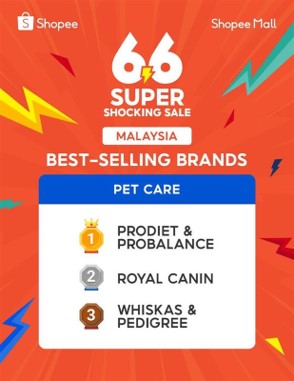
Singapore, Malaysia, and the Philippines had distinct campaign times and product preferences with Singapore favoring more premium products, Malaysia skewing towards more mass market cat food while the Philippines had a large population of pet lovers who drove demand for both cat and dog food with a rising interest in cat litter. Then we focused on underperforming categories in relation to market demands and pushed them into new categories.

At first, we revised the structure for choosing products with a budget allocation distributed among all products to cover long tail (Especially for Lazada), identified Top 5% Hero SKUs (stock keeping unit), High potential Products from the Store and then planned the introduction of new products in order to make a strong, positive first impression which is important to profitability.
As opposed to merely selling high volumes of a small number of popular things, we also engaged on Long Tail Product Activation by increasing visibility for long tail products and tapping into the power of marketplace to channel difficult-to-find items to a big number of clients.
Furthermore, we used a Test and Learn Strategy to test different bidding strategies and new sponsored solutions launched by Lazada and Shopee to find opportunities to enhance the effectiveness of the ads and maximise the share of search. To increase GMV (Gross Merchandise Value), some of the new ad features including the “new product launcher,” “first search slot”, maintaining high SOV for certain Hero categories and keywords were utilized and SKUs within and utilising the available platform and ad-type based optimizations.
Subsequently, by raising the bids of the products with high conversion rates and low expenditure SKUs, we concentrated on long-tail product activation using all automated campaigns on Lazada and Shopee. After that, efforts were made to set up aggressive bids for the SKUs in order to generate more impressions and direct the audience into the lower funnel.
Breakdown investment on a daily media strategy with budgets assigned in accordance with
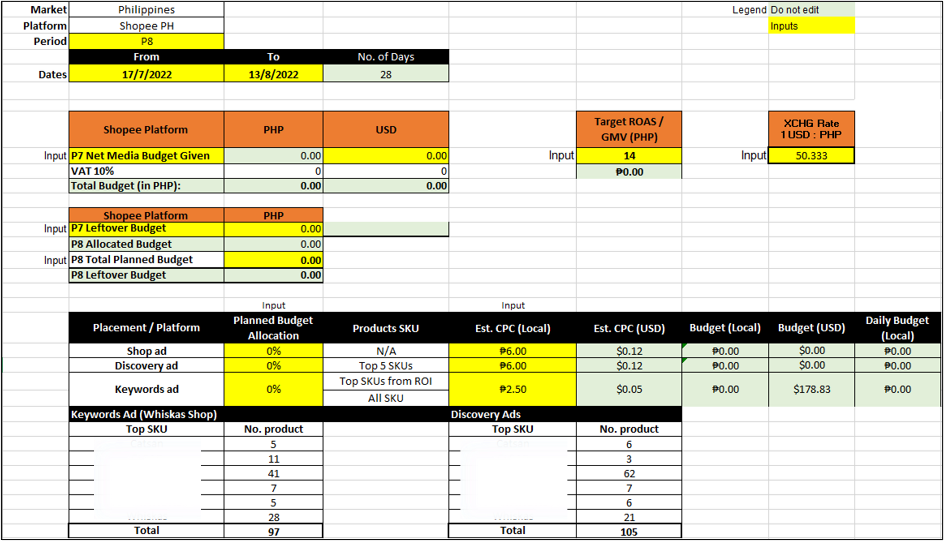
IN MARKETPLACE ADS MEDIA INVESTMENT PLAN
Meanwhile we concentrated on establishing the appropriate bids and bid adjustments based on the performance history of all the biddable products in its portfolio and adjusted to new targets to win and increase traffic.
Daily / Weekly Ads Optimizations:
Peak Day Ads Optimizataions:
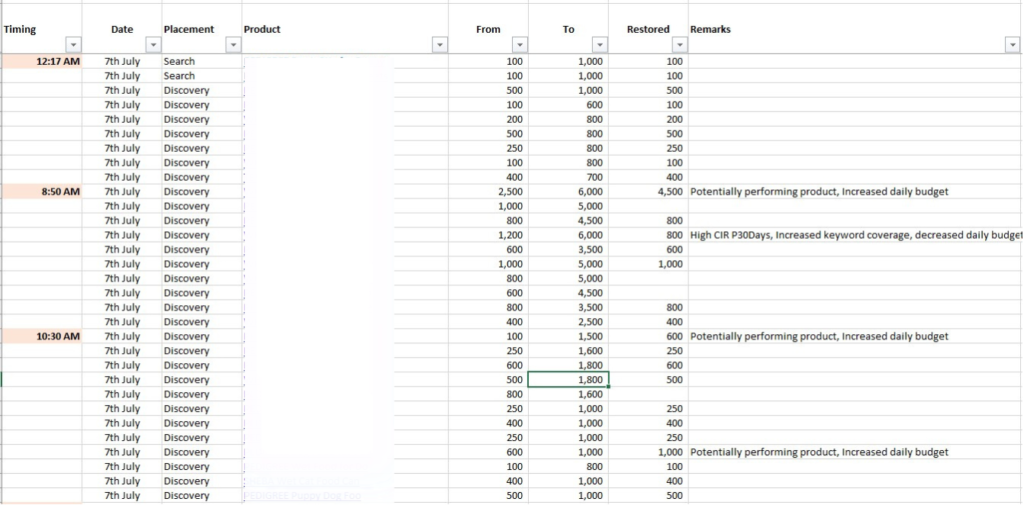
4. Monitoring SKUs and campaigns every two hours, increasing budgets for running out, ranking by highest to lowest GMV, and concurrently examining CIR.
5. Sorting the SKUs from Highest to Lowest Conversion Rate (CR) and raising the bids for products with low spending but a healthy CR% so that these products generate more money.
6. The most crucial thing is to keep track of all the Ads optimizations made to reset the game after Campaign Days, while also analysing the products with the most potential and boosting their daily budgets.
Monthly Ads Optimizations:
To improve cost efficiencies, we moved winning keywords into a new bucket of keywords and then switch to exact match to help reduce costs. We also moved winning keywords into Shop Ads to increase coverage at Shop level using Exact Match as well.
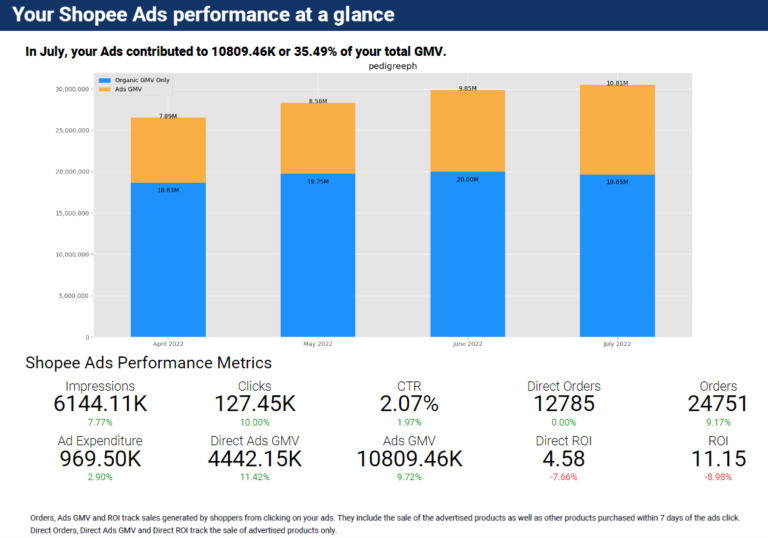
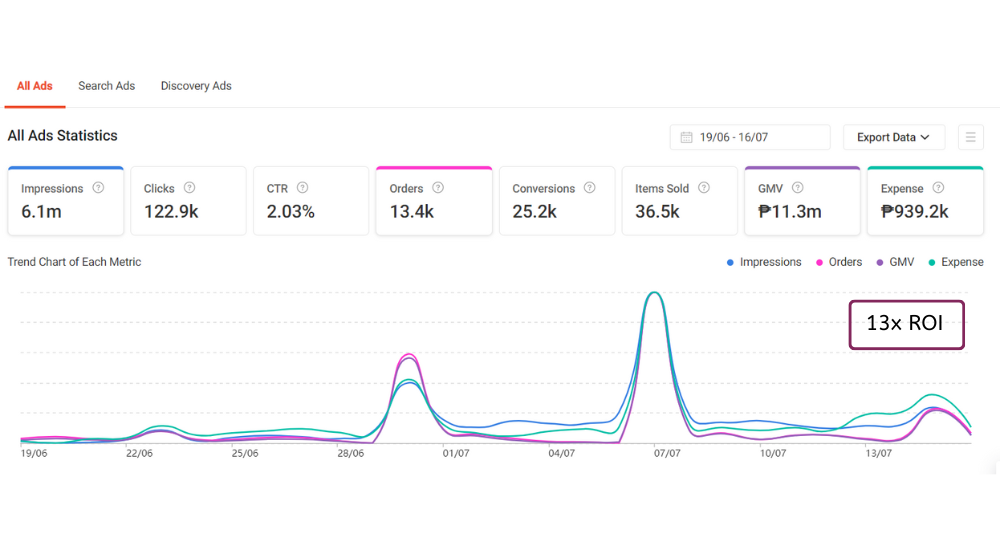
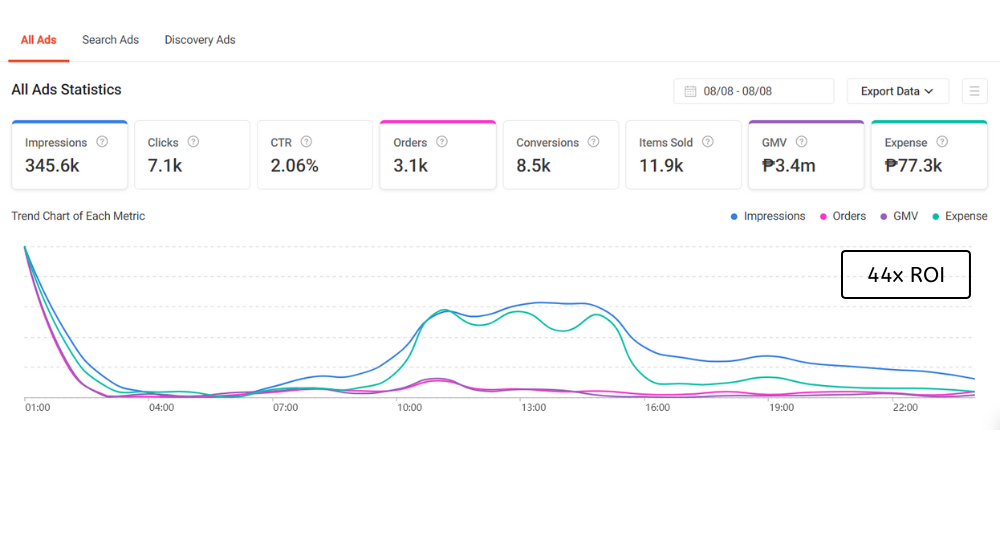
Peak Day Achievements:
If you want to make the most of the marketplaces, whilst being as efficient as possible, we are ready to assist you with that. Commerceplus makes product and advertisement management easy. We have extensive data analytics tools to give you insights into the market, competition, your products, and ads. We use algorithmic clustering to predict valuable keywords, and we use AI to help you optimize inventory, marketing spend, and customer support.
If you have any additional questions about how to How to optimize your marketplace sales, please send us an email at contact@commerceplus.asia or contact us to organise a quick 30 minute audit.